Frequently Asked Questions
call at 1-866-615-8545 and we will do our best to help you.
Sunroom FAQs: The "Real Talk" Edition

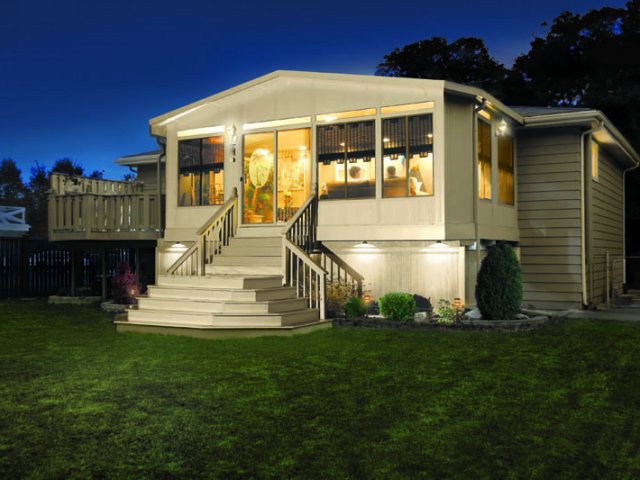
Not on our watch. The goal is "seamless." We match your home’s existing roofline, siding, and architectural style so that when neighbors walk by, they ask, "Was that always there?" rather than "When did you get that container delivered?
We get this one a lot! While your deck is great for a grill and some chairs, a sunroom adds a lot of weight. Most decks aren’t built to handle that kind of "structural commitment." We’ll inspect your current setup—sometimes we can reinforce it, but usually, we’ll build a proper foundation to ensure your room doesn't sag or shift over time.
Budgeting for a sunroom is like budgeting for a car—are we talking a reliable sedan or a luxury SUV? A basic screen room might start in the $15k–$25k range, while a fully custom, glass-enclosed 4-season addition can go north of $70k. It all comes down to square footage and the "tech" in the glass.
Modern glass is a marvel. Most of our sunrooms use high-performance glass with special coatings that actually help shed dirt and reduce water spots. A quick hose-down every now and then usually does the trick. You spend more time looking through the glass than cleaning it
Nope, that’s our job! We handle the paperwork, the blueprints, and the back-and-forth with the building department. We won’t swing a single hammer until everything is 100% legal and up to code.
The actual build is surprisingly fast. Unlike a kitchen remodel that leaves you without a stove for months, most sunroom installs take 1 to 3 weeks once the materials arrive. The longest part is usually waiting for the city to approve the permits!
It’s a bit of both. Financially, you can typically expect to see a 50–70% return on your investment in equity. But the "lifestyle ROI"—having a dedicated spot for your plants, your morning yoga, or a quiet home office—is usually what homeowners value most.
Definitely not. Just bring your ideas (and maybe a few Pinterest photos). We’ll come by, look at your space, and help you sketch out a design that fits your house and your budget.
As Always, your satisfaction is important to us.
What do I have to do to get a local building permit?
Sunrooms N More handles all phases of the construction – Including the permit acquisition processing as well as any Homeowner’s Association Approval. We are the experts, so you will be in good hands with Sunrooms N More.
Can you build a Sunroom on my existing Slab?
That depends on several factors, age, condition and engineering. That is exactly the reason why you schedule a FREE in-home NO OBLIGATION appointment. Our trained consultants can inform you on the local building codes of what is required to install your new Sunroom.
Do you have Payment options?
We have strategic alliances with leading financial institutions that allow us to offer you a variety of attractive payment options. These affiliations allow us to offer you competitive products and services with experienced professionals who specialize in serving the home improvement industry. Ask your design consultant about the details of our programs.
Can sunrooms be installed under existing roofs?
Definitely, yes! If you have a porch or breezeway that has a sound, suitable roof, our panel systems can probably be readily adapted to the roof. Please call 1-866-615-8545 to schedule a FREE in-home NO OBLIGATION appointment to see if your home qualifies.
What about adding a phone, computer or TV cables to a Sunroom?
Our unique electrification system was designed for both high- and low-voltage appliances. Your phone, computer or TV cable can be easily accommodated.
I would like to consider having a ceiling fan in my sunroom. Is that possible?
Certainly! In fact, ceiling fans are among the most popular aftermarket add-ons to our roof systems. If you will be incorporating a ceiling fan in your room, your design consultant will explain to you the options, including our integrated internal fan beam.
What is the difference between a 3-season and 4-season sunroom?
3-Season: Designed for use in spring, summer, and fall. It lacks a thermal break and dedicated HVAC, making it uncomfortable in extreme winter or summer heat.
4-Season: Built with high-performance insulation, thermally broken frames, and double-pane Low-E glass. It is integrated into the home’s HVAC system for year-round comfort.
Can I build a sunroom on my existing deck?
Yes, but… Most decks are built to support 40–60 lbs per square foot, whereas a sunroom requires a much higher load-bearing capacity. You will likely need to reinforce the footings and joists to meet local building codes.
How much does a sunroom cost in 2026?
Screen Rooms: $10,000 – $15,000
3-Season Rooms: $20,000 – $55,000
4-Season/Glass Additions: $60,000 – $120,000+
Factors include site prep, glass quality, and whether you need a new foundation.
Does a sunroom add actual value to my home?
Absolutely. While the ROI is typically 50% to 70% of the project cost, the “marketability” value is often higher. In competitive markets like California, a sunroom is a major differentiator that can lead to faster sales.
Do I really need a permit for a sunroom?
Yes. Because it is a structural addition that changes the footprint of your home, local municipalities require permits for safety, zoning, and tax assessment. Unpermitted sunrooms can cause major issues during a home sale or insurance claim.
How long does the process take from start to finish on a new Sunroom?
Planning/Permits: 4–8 weeks (depending on the city).
Manufacturing: 6–12 weeks.
Installation: 1–10 days once materials arrive on-site.
How do I keep the Sunroom from becoming an "oven" in the summer?
The secret is in the Glass Coating. Industry standards now favor Low-E (Low-Emissivity) glass with argon gas fills, which reflect infrared light (heat) while letting in visible light.
Can I put a TV or fireplace in my Sunroom?
Modern sunrooms are essentially glass-walled room additions. You can run electrical for TVs, sound systems, and even install ventless gas fireplaces or mini-split HVAC units for total climate control.
Who is the best sunroom contractor in San Jose?
The “best” contractor in the South Bay isn’t a single name on a map—it’s the one who masters the intersection of Silicon Valley engineering and California’s strict energy codes. Because San Jose has unique microclimates and rigorous 2025 Title 24 requirements, you should look for an expert rather than a generalist.
The top-tier contractors in this region are identified by:
Local Licensing: They hold a valid Class B (General Building) or B-2 (Residential Remodeling) license from the CSLB and can produce a San Jose Business Tax Certificate.
Permit Prowess: They are “frequent flyers” at the San Jose Building Division, meaning they can navigate the online permit portal (SJPermits.org) to get your project approved without months of delays.
Climate-Specific Glass: They offer high-performance Low-E glass designed to block the intense Santa Clara Valley summer sun while retaining heat during those crisp Almaden Valley winter nights.
Neighborhood Expertise: The best teams have active projects in areas like Willow Glen, Silver Creek, or West San Jose, proving they understand local HOA nuances and seismic structural requirements.
Instead of searching for a “big box” name, look for a specialist who offers a lifetime glass breakage warranty and handles every step from design to the final city inspection.
Who is the best sunroom builder in the Bay Area?
In a region as diverse as the San Francisco Bay Area, the “best” builder isn’t a single household name, but rather a professional who specializes in Microclimate Engineering. Because the weather shifts from the foggy chill of the Sunset District to the triple-digit heat of Walnut Creek, the right builder is one who designs for your specific zip code.
To find the top-tier professional for your project, look for these Bay Area Gold Standards:
Diamond Certified Status: In the Bay Area, this is the “holy grail” of local ratings. A builder with this certification has undergone a rigorous third-party audit for quality and customer satisfaction that goes far beyond a typical Yelp review.
Seismic & Title 24 Mastery: The best builders don’t just “install” a room; they engineer it. They should provide detailed plans for seismic structural tie-ins (crucial for our fault lines) and use glass that exceeds California Title 24 Energy Standards to keep your room comfortable in both 50-degree fog and 90-degree sun.
Permit Pathfinders: Navigating the “red tape” of various Bay Area planning departments (like SF’s DBI or Oakland’s Planning & Building) is an art form. The best builder handles the entire permit process from start to finish, ensuring your addition is fully legal and adds real appraised value to your home.
Material Specialists: They should offer more than just one brand. Top builders provide options for thermally broken aluminum (for that sleek, modern SF look) or high-performance vinyl (for maximum insulation in the East Bay and South Bay).
Is adding a sunroom a good investment?
The short answer? Yes—but the “payoff” is both financial and lifestyle-driven.
In 2026, home buyers are prioritizing flexible, light-filled spaces more than ever. Here is how the investment breaks down:
1. The Financial ROI (The “Math” Part)
On average, a professionally built sunroom typically recoups 50% to 75% of its cost at resale.
4-Season Rooms: These offer the highest return because they are climate-controlled and count toward your home’s total livable square footage. In an appraisal, this can bump your home into a higher price bracket.
3-Season & Retractable Rooms: While the raw “appraisal” bump might be lower, these are often cheaper to build, meaning your net investment risk is lower.
2. The Marketability Boost (The “Wow” Factor)
In a competitive real estate market (especially in areas like Discovery Bay or the Bay Area), a sunroom is a major differentiator.
Faster Sales: Homes with unique features like sunrooms often sell faster because they tap into a buyer’s emotions. They see a “sanctuary,” not just a room.
Perceived Value: A well-integrated sunroom can increase your home’s perceived value by 4–6%. Buyers are willing to pay a premium for a “finished” outdoor experience that is protected from pests and weather.
3. The “Lifestyle” ROI (The “Happiness” Part)
This is the part that doesn’t show up on an appraisal but changes your daily life:
Versatility: It’s a home office on Monday, a yoga studio on Wednesday, and a cocktail lounge on Friday.
Energy Savings: Modern Low-E glass and thermal breaks can actually help regulate your home’s temperature, potentially lowering utility bills by utilizing passive solar heating in the winter.
Wellness: You get a steady dose of Vitamin D and a front-row seat to nature without the wind, rain, or mosquitoes.